


























FITTER Conference
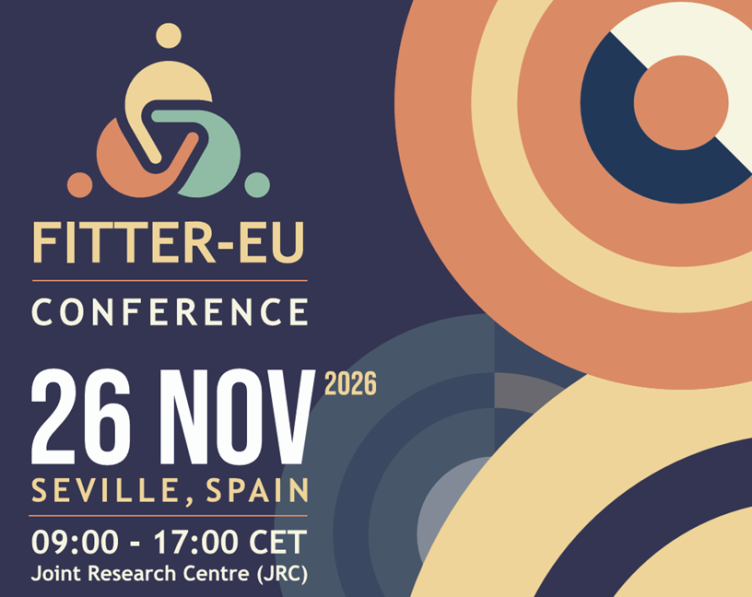
FITTER–EU FINAL CONFERENCE
From insight to impact: Innovating for an inclusive twin transition in Europe
JRC-Seville, Calle Inca Garcilaso 3, Edificio Expo, 41092 Seville, Spain
26 November 2026, 9.00- 18.45 (CET)
The conference will bring together policymakers, researchers, and stakeholders to explore actionable pathways towards a fair and inclusive twin transition across Europe. It will also showcase the main results of FITTER-EU, including key evidence, policy insights, and practical tools developed throughout the project. Please, register at: Final Conference
8.30-9.00 Registration
9.00-9.30 Welcome and Introduction
Chair: Mary Corbett, TFC Engage
- Welcome by Frederik Neuwahl (acting HoU JRC C6)
- Overview of FITTER-EU approach, Sara Clavero , TUD (20’)
9.30-10.45 Setting the scene: Europe’s Twin Transition at a Crossroads.
Chair: Silvia Sansonetti, Fondazione Giacomo Brodolini
- Delivering a Just Twin Transition: EU Priorities and Policy Pathways (20’). Frank Siebern-Thomas, Head of Unit for Fair Green and Digital Transitions and Research, DG EMPL
- Systemic Change for Advancing Eco-Social Justice in Europe’s Twin Transition (20’). Béla Galgóczi, European Trade Union Institute
- Addressing Energy Poverty through the Social Climate Fund and ETS2: Opportunities and Challenges for a Just Transition (20’). Davide Sabbadin, European Environmental Bureau
- Q&A (15’)
10.45-11.05 Coffee break
11.05-12.35 Thematic block #1: (What is happening and what could happen?) Impacts, Risks and uncertainties in the twin transition: Insights from Energy, Transport and Housing.
Chair: Olga Kolotouchkina, Universidad Complutense de Madrid
- Presentation of evidence from FITTER (20’) Laura Armayones Carranza (EURECAT)
- Panel discussion: “What Sectoral risks should we prepare for in the Twin Transition?” (50’)
- Panellists: Ignacio Velo Antolin (ONCE-Ilunion, Spain), Andres Arias Astray (UCM, Spain) Laura Armayones Carranza (EURECAT, Spain)
- Q&A (20’)
12.35-13.35 Lunch break with poster presentations
13.35 – 15.05 Thematic block #2: (What can we do?) Co-creating Responses for a Fair Twin Transition.
Chair: Maria Sangiuliano, Smart Venice
- Presentation of co-creation approach and key measures (15’) Oriana Salomon Balsamo (SV)
- Panel discussion: Policy Responses to the Twin Transition: What Works in Practice? (45’). Panelists: Pia Weiser (WECF, Germany); Bence Juhász (SFC , Hungary); Paloma Piqueiras Conlledo (UCM, Spain).
- Q&A (30’)
15.05-15.25 Coffee break
15.25- 16.55 Thematic block #3: From Insight to Impact: Tools for a Fair Twin Transition (90’).
Chair: Maria Chiara Leva, Technological University Dublin
- Presentation and demonstration of the FITTER Platform (20’) Francisco
- A novel tool supporting geo-spatial accessibility analyses and policies addressing and monitoring transport poverty in Europe – Alessandro Giordano (JRC.C6) (15’ mins)
- Some reflection on direct experience regarding twin transitions related policies in the Irish Department of Environment, Climate and Communications John Finnegan (TBC... 15’mins)
- Panel discussion: How can decision support tools enhance policymaking?
- Q&A (30’)
16.55-17.00 Closing reflections Sara Clavero (TUD)
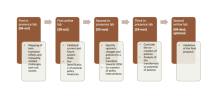
The process of identifying and implementing potential solutions involves several interconnected steps, as outlined in the following:
During this step, key participants with expertise or interest in the research are identified. Relevant government agencies, academia, research institutions, consulting firms, and civil society.
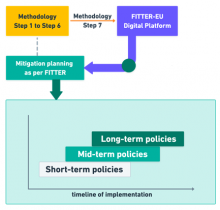
This step involves developing forward-looking risk mitigation plans to reduce inequality effects. It includes ex-ante policy impact assessments and evaluating actions necessary to address inequalities, comparing them with current national and EU policies. Deficiencies in current frameworks are identified, aiming for an equitable twin transition. Close engagement with sister projects like READJUST and ST4TE provides comprehensive insights into drivers, emerging inequalities, and policies for greener, more equal, and productive societies.
This step entails reviewing existing literature, assessing national and European quantitative data, and gathering information from interviews and workshops with experts. It aims to identify significant groups experiencing inequality and map relevant policies and actions from the past decade. Reviewing National Recovery and Resilience Plans (NRRPs) helps establish a baseline scenario in each sector and evaluate the outcomes of previous policies. The goal is to align future policies with fairness and inclusiveness to reduce inequality effects.
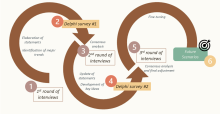
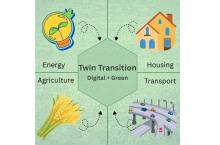
Given the uncertainty of future developments, the project will adopt three scenarios based on the proportion of sustainably sourced electricity in Europe by 2050: scenario 1 (50% likelihood), scenario 2 (35% likelihood), and scenario 3 (15% likelihood). These scenarios will be developed through a comprehensive literature review, focus groups with experts, and a Delphi survey involving at least 50 recognized experts. The scenarios will forecast deviations in the Energy, Transport, Building & Housing, and Food & Agriculture sectors.
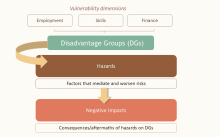
This step identifies potential hazards (e.g., loss of business, closure of services, end of petrol car sales) related to the twin transition across labor market, financial resources, and skills dimensions. It also identifies affected social groups (e.g., seniors, low-income households, single parents, migrants, people with disabilities). Expert panels will participate in focus groups to explore these aspects in depth.
For each "Disadvantaged Group-Hazard" pair in each scenario, distinct probabilities and severity rates will be calculated using quantitative data and qualitative insights. Relevant indicators include internet access, digital literacy, affordability of digital devices, job creation, income changes, SME activity, STEM enrollment, educational resources, digital healthcare access, public services affordability, and community participation in the twin transition. The Magnitude of Risk will be calculated as:
Magnitude of Risk = Probability of a hazard × Severity of a hazard
Hazards will be analyzed individually and in conjunction with others to identify dependencies and trends.
The Total Risk Assessment (TRA) for each disadvantaged group and hazard profile will be prioritized from highest to lowest. Hazards representing 80% of the total risk across all scenarios will be selected for mitigation planning.
This step involves assessing the methods, results, and digital platform within the FITTER ecosystem. Two groups of testers will be utilized:
- Group 1: Policymakers who were initially involved in the project.
- Group 2: Policymakers not involved in the project to avoid conflicts of interest.
Group 1 will identify and engage Group 2 testers during the validation phase to ensure unbiased feedback.
