






























Report on the identification of DGs
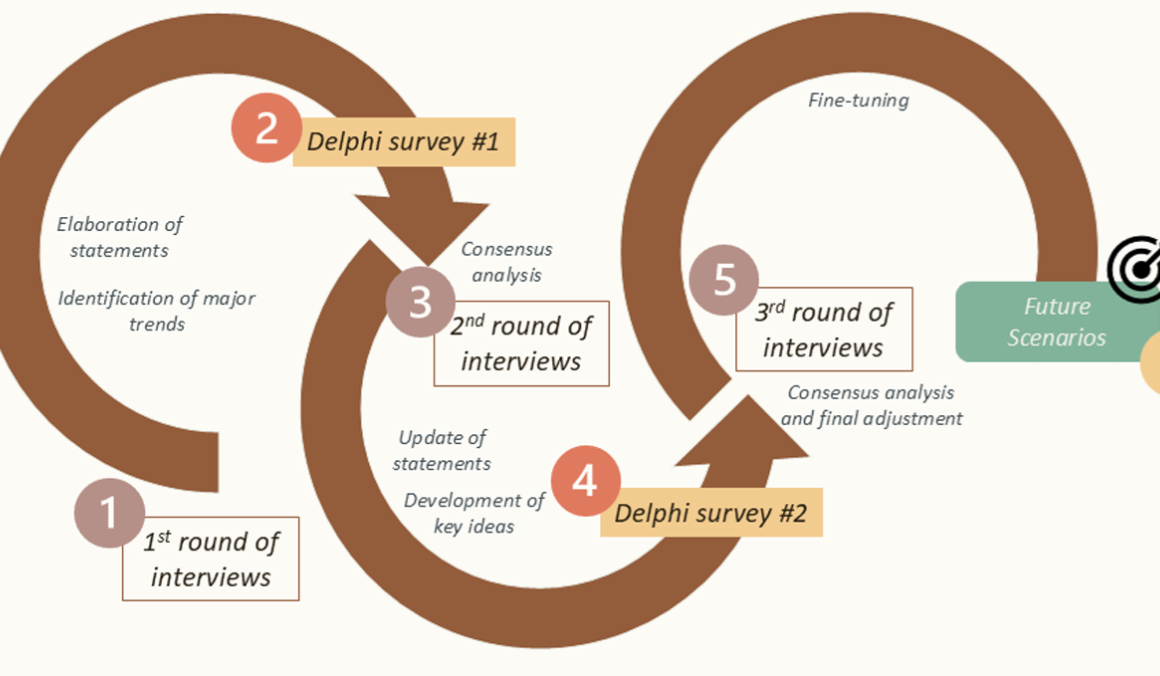
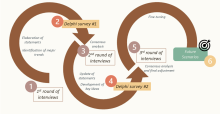
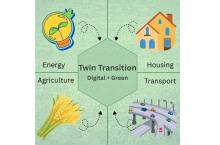
The present document (D3.2) outlines the scenario-building process and the preliminary identification of disadvantaged groups in the context of the Twin Transition. Its main purpose is to present a first set of exploratory future scenarios for the year 2050, developed across four key sectors: agriculture and food, energy, transport and mobility, and housing and built environment. These scenarios were co-designed using a methodology that combines literature review, semi-structured expert interviews and Delphi surveys.
The deliverable builds upon the work conducted in D2.1 and D3.1 and operationalises a scenario-building methodology guided by the multi-level perspective framework. It focuses on anticipating how structural changes, driven by the green and/or digital transitions policy objectives, may reshape sectoral systems and affect different population groups unequally. Therefore, the scope of D3.2 is twofold:
- First, to document the creation of sector-specific scenarios grounded in both expert knowledge and consensus. These scenarios are not predictive but exploratory and aim to capture a range of plausible futures shaped by key drivers and uncertainties around the fulfilment of a policy objective.
- Second, to provide an initial identification of population groups that may be structurally disadvantaged under each sector-specific scenario.
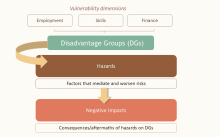
The insights from D3.2 will feed into the design of future project tasks including T3.3, T4.1 and T4.2. D3.3 will follow the future scenarios description with the characterization of disadvantaged groups, hazards and negative impacts.
For further details, please check the full document:
https://zenodo.org/records/17541402
Note: this deliverable has been submitted to the EU Commission and is currently under review. It has not yet been approved and should be used at the reader’s own discretion.

