








































T2.2 Mapping the governance of the twin transition
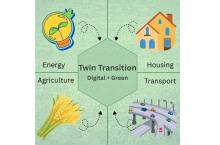
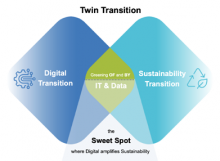
The document examines key aspects of the twin transition process in six partner countries: Germany, Hungary, Ireland, Italy, Portugal, and Spain. It builds on the theoretical framework introduced in the FITTER D2.1 deliverable and is informed by a comprehensive review of the relevant literature. Drawing on this foundation, the document formulates the following research questions:
- “How can a governance model ensuring broad civil society participation – across local, regional, national, and EU levels – effectively address structural vulnerabilities in the twin transition by fostering transparency, accountability, and stakeholder inclusion?”
- “Specifically, what mechanisms can encourage diverse voices, can strengthen democratic legitimacy, and can yield coherent policies bridging environmental and digital objectives in Europe?”
Building on the formulated research questions, the document undertakes a comprehensive analysis of the factors that directly and indirectly shape twin transition processes in the partner countries. A central focus is the role of civil society engagement in identifying and addressing vulnerabilities associated with the twin transition. By integrating diverse voices, institutions are better equipped to detect and mitigate hidden barriers across local, regional, national, and EU levels. In this context, addressing power relations is essential for understanding how certain actors maintain disproportionate influence while others remain marginalized. Meaningful civil society involvement in decision-making processes strengthens institutional legitimacy, transparency, and accountability.
The document further provides a literature analysis of the partner countries, covering the following topics: twin transition governance, National Recovery and Resilience Plans (RRPs), administrative capacity, mission-oriented policies and policy learning; top-down versus bottom-up dynamics, green versus digital transitions, exnovation and the phasing out of unsustainable practices, and the extent to which inequalities are addressed in the governance of the twin transition.
The analysis goes beyond the literature review by highlighting both commonalities and differences across the six countries and examining existing barriers and shared challenges across countries. This is complemented by an assessment of potential factors for success, including the availability of financial resources (EU versus national funding), institutional and administrative coordination, international cooperation and partnerships, democratic structures and checks and balances, stakeholder engagement and social dialogue, the integration of social and economic dimensions, and levels of public acceptance and awareness.
For further details, please check the full document:
https://zenodo.org/records/17541297
Note: this deliverable has been submitted to the EU Commission and is currently under review. It has not yet been approved and should be used at the reader’s own discretion.