


























Embedding social justice in twin transition research: Concepts, definitions and methodological approach (3)
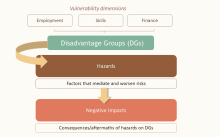
The document discusses the FITTER-EU methodology, which is composed of three interlinked approaches. First, systems inquiry helps researchers and policymakers see beyond surface-level problems, using tools such as causal loop diagrams and leverage points to identify the deeper structures that drive unsustainable outcomes and social disparities. Second, risk assessment is used to evaluate the likelihood and severity of unintended consequences, with an emphasis on supplementing traditional analysis with systems thinking to better address structural inequalities. Third, impact assessment considers the broader effects of policies, paying special attention to how changes might affect different groups, particularly in terms of gender and intersectional inequalities.
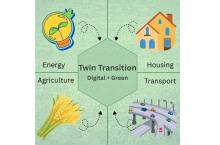
Building on earlier work, FITTER-EU now focuses on targeted policy objectives in three key sectors of analysis: Energy, Transport and Housing. Specifically, the focus is on renewable energy, electric mobility, and climate-resilient housing. These themes, selected for their relevance and policy infrastructure, are explored through case studies in six European countries. Each sector presents unique challenges. In transport, FITTER-EU highlights issues such as induced car demand and underfunded public transit, advocating for transformative policies such as reallocating road space and integrating mobility systems. In energy, the focus is on rapid decarbonisation and equitable access to renewables, with attention to energy poverty and fair distribution of costs and benefits. Housing analysis centres on the right to adequate shelter, the barriers to retrofitting homes, and the impact of financialisation, emphasising the need for climate-resilient, affordable housing for all.
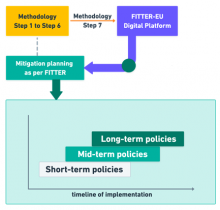
To support these goals, the FITTER-EU platform offers a modular, scalable, and transparent digital environment for policy appraisal. It integrates predictive modelling, risk assessment, systems thinking, and stakeholder engagement, helping users visualise hazards, identify disadvantaged groups, and plan mitigation strategies. The platform acknowledges its limitations, such as data quality and predictive uncertainty, and stresses the importance of qualitative insights alongside quantitative analysis.
For further details, please check the full document:
https://zenodo.org/records/18341433
Note: this deliverable has been submitted to the EU Commission and is currently under review. It has not yet been approved and should be used at the reader’s own discretion.