

Energy: From Insight to Impact
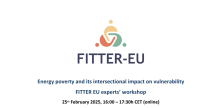
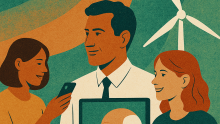
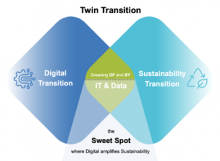
The new booklet devoted to the energy sector in the context of the twin transition has recently been published. It examines who benefits from Europe’s shift to renewable energy, who risks being left behind, and how public policy can make the transition fairer. It draws on research conducted by the Horizon Europe project FITTER-EU across six European countries: Germany, Hungary, Ireland, Italy, Portugal and Spain. It focuses on household solar power and access to renewable energy.
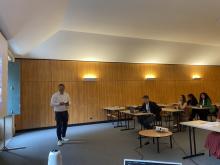
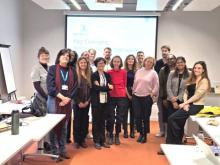
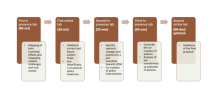
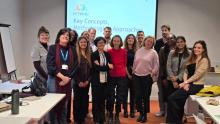
Between September and December 2025, FITTER-EU held co-creation labs in all six countries, bringing together organisations working with disadvantaged groups, policymakers and experts. These labs produced 41 proposals on energy and energy-related housing issues, ranging from adjustments to existing schemes to entirely new policies. The outcomes of the labs, together with an analysis of relevant literature, led to the formulation of the following key messages:
- Europe’s shift to solar and renewable energy is progressing at two speeds. The benefits mainly go to homeowners who can afford the upfront costs and manage digital tools. Low-income households, tenants and people with limited digital skills are being left behind and risk having to bear an increasing share of grid costs.
- Affordability is the dominant concern, particularly among those already struggling financially. Higher electricity bills and heating and cooling costs are among people's greatest fears, especially if they cannot install solar panels at home. Households that have repeatedly fallen behind on utility bills are by far the most concerned. This pattern is similar across many European countries, meaning that solutions can be transferred between Member States.
- Support for solar panels does not necessarily reach those who need it most. Subsidies that require households to pay upfront, own their homes and apply online tend to favour middle- and higher-income households. Those who need support the most are often the least able to access it.
- Digital-by-default energy services risk shutting people out. Smart meters, app-based tariffs and online-only applications can exclude older people and those with limited digital skills unless non-digital alternatives and in-person support are guaranteed.