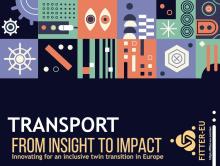




























Transport: From Insight to Impact
Deliverables
2026/11/13
Transport: From Insight to Impact
Deliverables
Analysis of inequalities in access to clean mobility, highlighting key challenges and policy recommendations to tackle transport poverty and ensure accessible, affordable and inclusive transport systems.
The new booklet devoted to the transport sector in the context of the twin transition has recently been published. It examines how the shift to clean mobility can reduce emissions without deepening transport poverty. It draws on research conducted under the Horizon Europe project FITTER-EU across six European countries, with transport-related evidence mainly from Hungary, Italy and Spain. The booklet focuses on electric mobility, public transport and access to essential journeys, and translates the findings into seven policy recommendations. The document highlights the following key messages:
- The benefits of clean mobility often go to households and businesses that can afford to buy new electric vehicles (EVs). Low-income people may remain dependent on older petrol or diesel cars or inadequate public transport.
- Rising fuel and repair costs are the leading concerns. Unemployed people, frequent travellers, women and people who do not speak the national language are among those facing particular difficulties.
- Rural and peripheral residents can face a double bind: too little public transport to live without a car and too few charging points to switch to an EV.
- Low-emission zones, inaccessible vehicles, digital-only ticketing and unsafe journeys can exclude people when suitable alternatives and assistance are lacking.
- Seven policy recommendations show how governments and transport providers can target support, guarantee basic services, improve accessibility and give users a genuine voice.
Dokument